Mindful Consumption: How Conscious Living Can Help Protect the Environment
- Dean Rusk Delicana
- May 12
- 9 min read

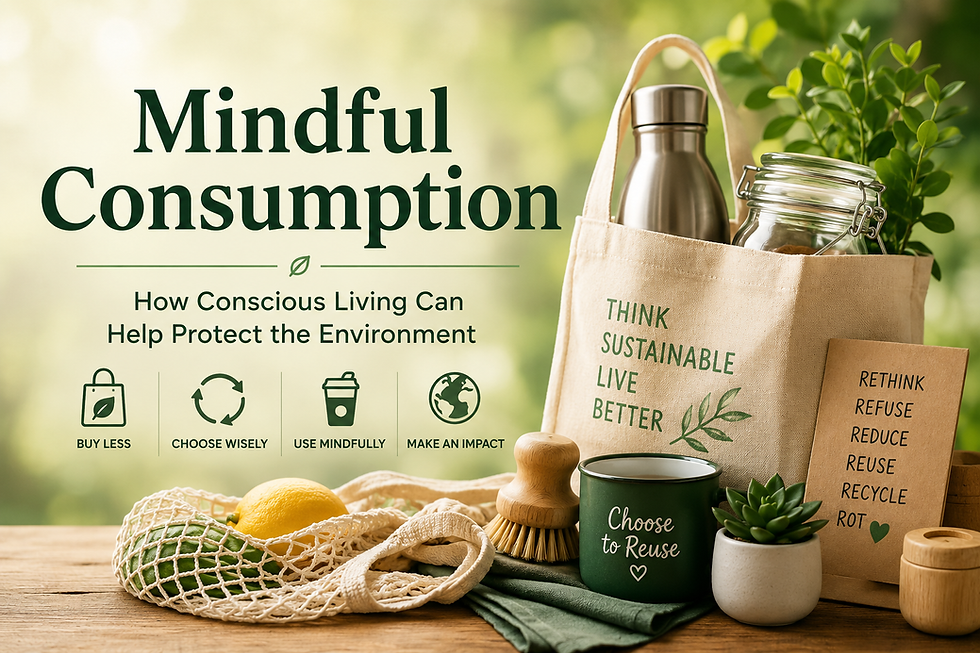
Introduction
Modern society is built around consumption. Every day, people buy food, clothing, electronics, household products, and digital services—often without considering the environmental cost behind these purchases. Fast fashion, single-use plastics, excessive packaging, overproduction, and impulsive buying have created a global culture of waste that contributes heavily to pollution, climate change, and resource depletion.
In response to this growing environmental crisis, a movement toward mindful consumption has emerged. Mindful consumption encourages people to become more aware of what they buy, how they use resources, and the long-term impact of their choices on the planet.
Rather than promoting deprivation or extreme minimalism, mindful consumption focuses on intentional living. It asks consumers to pause, reflect, and make choices based on need, sustainability, and long-term value instead of impulse, convenience, or social pressure.
As climate concerns continue to rise worldwide, mindful consumption is becoming one of the most practical ways individuals can reduce their environmental footprint and contribute to a more sustainable future.
What Is Mindful Consumption?
Mindful consumption refers to the practice of consciously choosing products, services, and habits that align with personal values, environmental responsibility, and long-term well-being.
It involves asking questions such as:
Do I really need this?
How was this product made?
What environmental impact does this purchase have?
Will this item last?
Can it be reused, repaired, or recycled?
Am I buying this out of necessity or impulse?
Mindful consumption applies to many areas of life, including:
Shopping habits
Food choices
Energy use
Water consumption
Transportation
Media and digital consumption
Waste generation
The goal is not perfection. Instead, it is about becoming more intentional and reducing unnecessary consumption that harms both individuals and the environment.
The Environmental Impact of Overconsumption
To understand the importance of mindful consumption, it is necessary to examine the consequences of excessive consumer behavior.
1. Resource Depletion
Most products require natural resources such as water, minerals, forests, fossil fuels, and agricultural land. Mass production places enormous pressure on the planet’s limited resources.
For example:
Fast fashion requires massive amounts of water and cotton production.
Electronics depend on rare earth minerals mined from the environment.
Plastic products rely heavily on fossil fuels.
As global demand increases, ecosystems become strained and natural resources become depleted faster than they can recover.
2. Pollution and Waste
Consumer culture generates enormous amounts of waste.
Landfills around the world are overflowing with:
Plastic packaging
Discarded electronics
Textile waste
Food waste
Single-use products
Many materials do not biodegrade easily. Plastics, for instance, can remain in the environment for hundreds of years, polluting oceans, harming wildlife, and entering the food chain as microplastics.
Industrial production also contributes to:
Air pollution
Water contamination
Soil degradation
Chemical waste
Excessive consumption creates a cycle where products are rapidly manufactured, quickly discarded, and continuously replaced.
3. Climate Change
Consumption directly contributes to greenhouse gas emissions.
The production, transportation, packaging, and disposal of goods all require energy—much of which still comes from fossil fuels.
Industries with major climate impacts include:
Fast fashion
Transportation
Meat production
Manufacturing
Construction
Consumer electronics
According to environmental studies, global consumer lifestyles account for a significant share of global carbon emissions.
Mindful consumption can help reduce these emissions by lowering demand for unnecessary production and encouraging sustainable alternatives.
4. Loss of Biodiversity
Overconsumption also contributes to habitat destruction and biodiversity loss.
Forests are cleared for agriculture, mining, and industrial development. Oceans are overfished to meet growing food demands. Wildlife habitats disappear as cities expand and industries grow.
As ecosystems become damaged, countless plant and animal species face extinction.
Mindful consumption encourages people to support products and companies that prioritize environmental protection and ethical sourcing.
How Mindful Consumption Helps the Environment
Mindful consumption offers practical solutions that individuals can apply immediately in daily life.
1. Reduces Waste
When consumers buy fewer unnecessary products, less waste ends up in landfills.
Examples include:
Using reusable bags and bottles
Repairing items instead of replacing them
Choosing products with minimal packaging
Buying durable goods
Even small changes can significantly reduce household waste over time.
2. Lowers Carbon Footprint
Mindful consumers often:
Buy local products
Reduce energy use
Avoid excessive online shopping
Use public transportation
Consume less fast fashion
These choices reduce carbon emissions associated with manufacturing and transportation.
Lower demand for disposable products also reduces industrial production, thereby reducing fossil fuel consumption.
3. Encourages Sustainable Businesses
Consumer demand influences corporate behavior.
When people support environmentally responsible companies, businesses are encouraged to adopt:
Ethical labor practices
Sustainable sourcing
Eco-friendly packaging
Renewable energy
Waste reduction strategies
Mindful consumption creates economic pressure that can shift entire industries toward sustainability.
4. Promotes Circular Economy Practices
Traditional economies follow a “take-make-dispose” model. Mindful consumption supports a circular economy where products are:
Reused
Repaired
Recycled
Shared
Repurposed
This reduces the need for constant resource extraction and minimizes environmental damage.
Examples include:
Thrift shopping
Clothing swaps
Refurbished electronics
Furniture restoration
Community sharing programs
Mindful Consumption in Everyday Life
Mindful Shopping
Mindful shopping means avoiding impulse purchases and focusing on quality over quantity.
Helpful habits include:
Waiting before making purchases
Creating shopping lists
Researching ethical brands
Buying secondhand when possible
Avoiding trend-driven spending
Consumers become more aware of marketing tactics designed to encourage unnecessary spending.
Mindful Eating
Food consumption has major environmental consequences.
Industrial agriculture contributes to:
Deforestation
Water pollution
Methane emissions
Soil depletion
Mindful eating can include:
Reducing food waste
Eating locally grown food
Supporting sustainable farming
Choosing plant-based meals more often
Avoiding excessive packaging
These habits reduce environmental strain while promoting healthier lifestyles.
Mindful Technology Use
Digital consumption also affects the environment.
Data centers, streaming services, and electronics manufacturing consume large amounts of electricity and raw materials.
Mindful digital habits include:
Keeping devices longer
Repairing electronics
Reducing unnecessary upgrades
Limiting excessive streaming
Recycling electronic waste responsibly
Psychological Benefits of Mindful Consumption
Mindful consumption benefits not only the environment but also personal well-being.
Studies suggest that intentional living can reduce:
Financial stress
Anxiety caused by overconsumption
Clutter and disorganization
Social comparison
People who practice mindful consumption often report:
Greater gratitude
Improved financial stability
Increased life satisfaction
Stronger sense of purpose
Rather than constantly chasing more possessions, mindful consumers focus on experiences, relationships, and meaningful living.
Challenges to Mindful Consumption
Although mindful consumption is beneficial, it can be difficult to practice consistently.
1. Advertising and Consumer Culture
Modern advertising encourages constant purchasing by linking products with:
Happiness
Success
Beauty
Social status
Consumers are exposed to thousands of advertisements daily, making impulsive consumption difficult to avoid.
2. Convenience Culture
Single-use products and fast delivery services are designed for convenience.
Sustainable alternatives may sometimes:
Cost more initially
Require extra effort
Be less accessible
However, long-term mindful habits often save money and reduce waste over time.
3. Greenwashing
Some companies market products as “eco-friendly” without meaningful environmental action.
Consumers must research brands carefully and look for transparency, certifications, and ethical practices.
Practical Tips for Practicing Mindful Consumption
Here are simple ways to begin:
Pause Before Buying
Wait 24 hours before purchasing non-essential items.
Buy Less, Choose Better
Focus on durable, high-quality products.
Reduce Single-Use Plastics
Use reusable containers, bottles, and bags.
Support Ethical Brands
Research companies that prioritize sustainability.
Practice Minimalism
Keep only what adds value to your life.
Repair and Reuse
Extend the lifespan of products whenever possible.
Reduce Food Waste
Plan meals carefully and store food properly.
Be Conscious of Digital Consumption
Limit unnecessary device upgrades and energy use.
The Future of Mindful Consumption
As environmental awareness grows, mindful consumption is becoming increasingly important in global sustainability efforts.
Governments, educators, businesses, and environmental organizations are encouraging:
Sustainable production
Circular economies
Responsible consumer behavior
Climate-conscious lifestyles
Younger generations, particularly Millennials and Generation Z, are also driving demand for sustainable and ethical products.
Technology may further support mindful consumption through:
Product transparency apps
Carbon footprint tracking
Sustainable shopping platforms
Secondhand marketplaces
Although individual actions alone cannot solve climate change, collective shifts in consumer behavior can significantly influence industries and environmental outcomes.
Conclusion
Mindful consumption is more than a trend—it is a practical response to the environmental challenges created by modern consumer culture.
By becoming more intentional about what we buy, use, and discard, individuals can:
Reduce waste
Lower carbon emissions
Protect natural resources
Support sustainable businesses
Improve personal well-being
Every purchase sends a message about the kind of world consumers want to support.
While no one can live perfectly sustainably, small mindful choices made consistently can create meaningful environmental change over time. In a world facing climate change, pollution, and resource depletion, mindful consumption offers a powerful path toward a healthier planet and a more balanced way of living.
Frequently Asked Questions (FAQ)
What is mindful consumption?
Mindful consumption is the practice of making intentional and conscious decisions about what you buy, use, and consume. It encourages people to reduce unnecessary purchases, avoid waste, and choose products that align with sustainability, ethical values, and long-term well-being.
Why is mindful consumption important for the environment?
Mindful consumption helps reduce waste, pollution, greenhouse gas emissions, and overuse of natural resources. By consuming less and choosing sustainable products, individuals can lower their environmental impact and support healthier ecosystems.
How does overconsumption affect climate change?
Overconsumption increases demand for manufacturing, transportation, packaging, and energy use. These processes rely heavily on fossil fuels, which release greenhouse gases into the atmosphere and contribute to global warming and climate change.
What are examples of mindful consumption?
Examples of mindful consumption include:
Buying only what you truly need
Choosing reusable products
Supporting sustainable brands
Reducing food waste
Repairing instead of replacing items
Shopping secondhand
Using energy and water responsibly
Is mindful consumption the same as minimalism?
Not exactly. Minimalism focuses on owning fewer possessions, while mindful consumption focuses on making intentional choices about consumption. However, both encourage reducing unnecessary purchases and living more consciously.
Can mindful consumption save money?
Yes. Mindful consumption often reduces impulsive spending and encourages purchasing durable, high-quality products. Over time, these habits can improve financial stability and reduce unnecessary expenses.
How can I start practicing mindful consumption?
You can start by:
Pausing before making purchases
Creating shopping lists
Reducing single-use plastics
Buying secondhand items
Supporting ethical companies
Reducing food waste
Being aware of advertising influences
Small consistent changes can make a significant difference over time.
What is the relationship between mindful consumption and sustainability?
Mindful consumption supports sustainability by reducing environmental harm and encouraging responsible use of resources. Sustainable living depends on conscious consumer behavior that minimizes waste and protects ecosystems for future generations.
How does fast fashion relate to mindful consumption?
Fast fashion encourages excessive clothing purchases and rapid disposal of garments. It contributes to pollution, textile waste, and high carbon emissions. Mindful consumption promotes buying fewer, higher-quality clothes and supporting ethical fashion brands.
Can one person really make a difference through mindful consumption?
Yes. Individual actions may seem small, but collective consumer behavior influences industries, governments, and markets. When many people choose sustainable habits, businesses are more likely to adopt environmentally responsible practices.
What are the biggest challenges to mindful consumption?
Some common challenges include:
Advertising and consumer culture
Convenience-based lifestyles
Cheap disposable products
Social pressure to keep buying
Lack of awareness about environmental impacts
Despite these challenges, gradual habit changes can still lead to meaningful progress.
Does mindful consumption apply to digital life too?
Yes. Digital consumption also affects the environment through energy use, data centers, and electronic waste. Mindful digital habits include limiting unnecessary upgrades, recycling electronics properly, and reducing excessive streaming or screen time.
Reduce Food Waste and Practice Mindful Consumption at Home
One of the biggest hidden forms of overconsumption happens in our kitchens.
Every year, families throw away large amounts of perfectly usable food due to poor meal planning, forgotten groceries, and last-minute takeout decisions. Food waste not only wastes money — it also contributes to landfill overflow, methane emissions, excessive packaging waste, and unnecessary use of water and energy resources.
If you want to apply mindful consumption in a practical everyday way, reducing food waste is one of the most powerful places to start.
That’s why resources like FridgePlan — The Parents’ Guide to Stress-Free Meal Planning can make such a meaningful difference.
This simple and practical digital guide helps busy families:
Plan meals more intentionally
Use groceries efficiently
Reduce unnecessary food waste
Save money on groceries
Lower stress around daily meal decisions
Create healthier home routines
Instead of overbuying food that eventually gets thrown away, FridgePlan encourages a more mindful approach to food consumption — helping families make the most of what they already have.
Why Meal Planning Supports Sustainable Living
Mindful consumption is not only about buying less — it’s about using resources wisely.
When families plan meals intentionally, they often:
Waste less food
Buy fewer unnecessary groceries
Reduce impulse purchases
Minimize packaging waste
Save energy and transportation costs from frequent store trips
Small habits like meal planning can create a surprisingly large environmental impact over time.
A Simple Step Toward More Conscious Living
If you’re looking for a realistic and family-friendly way to practice mindful consumption, meal planning is an excellent place to begin.
➡️ Explore the guide here: Stop Throwing Away Food — FridgePlan
Resources
United Nations Environment Programme (UNEP)
World Wildlife Fund (WWF)
Environmental Protection Agency (EPA)
Ellen MacArthur Foundation – Circular Economy
https://www.ellenmacarthurfoundation.org
Intergovernmental Panel on Climate Change (IPCC)
The Story of Stuff Project
Greenpeace International
Sustainable Consumption Research and Action Initiative


Comments