Recycling at Home: Why It Matters More Than Ever (And How Families Can Get It Right)
- Dean Rusk Delicana
- Apr 6
- 4 min read

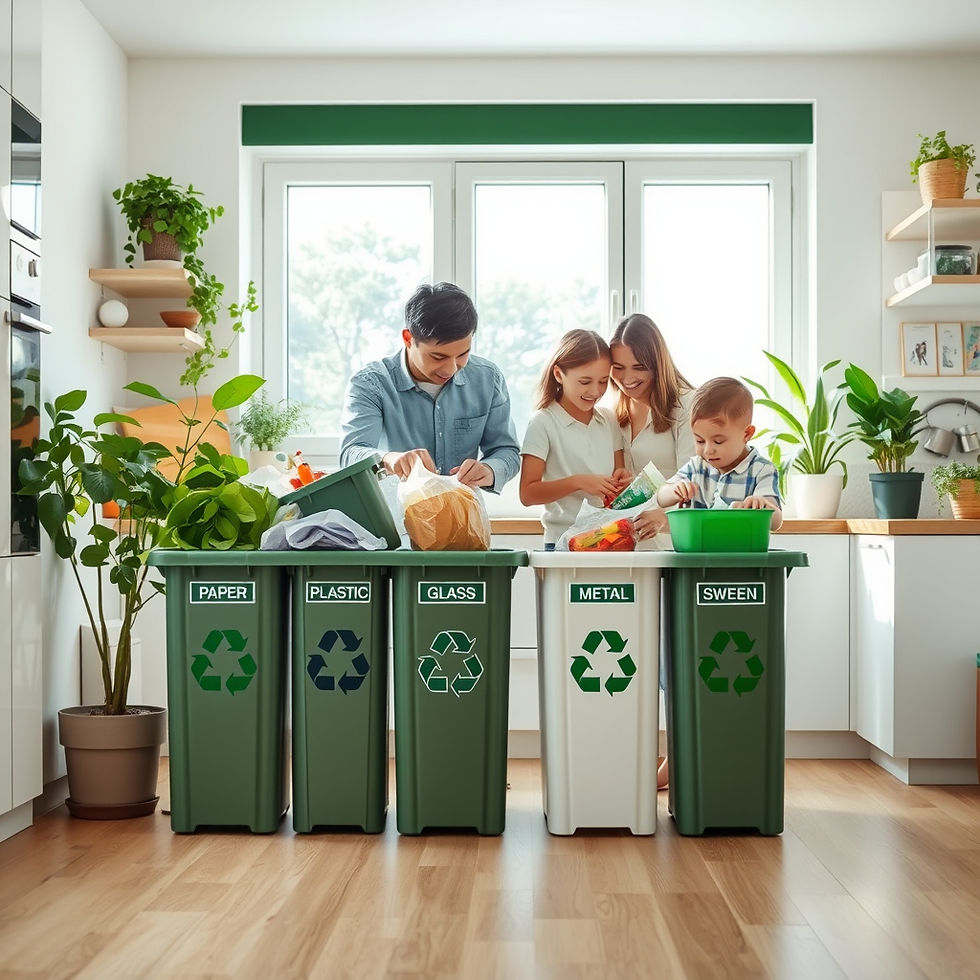
Recycling at home is more than just sorting waste—it’s a daily decision that shapes the future of our environment. While many households are aware of its importance, global recycling rates remain relatively low, and much of the problem begins at home.
The good news? Around the world, some countries have built strong recycling cultures—proving that with the right systems and habits, households can make a powerful difference.
1. Causes: Why Recycling at Home Is Often Inconsistent
Even with good intentions, many households struggle to recycle effectively. The reasons are often practical rather than motivational.
1.1 Confusion About What Can Be Recycled
Different recycling rules across communities create uncertainty. Many households engage in “wish-cycling,” placing questionable items in bins, which leads to contamination.
1.2 Lack of Accessible Systems
Without clearly labeled bins or enough space at home, sorting waste becomes inconvenient. When recycling is difficult, participation drops.
1.3 Time and Effort Barriers
Cleaning containers, separating materials, and remembering schedules can feel overwhelming—especially for busy families.
1.4 Gaps in Education
Research shows that both adults and students often lack proper guidance on waste segregation. Without clear instruction, recycling habits remain inconsistent.
1.5 Weak Community Support
In some areas, limited collection services or unclear policies discourage households from participating fully.
2. Effects: What Happens When Recycling at Home Falls Short
When recycling is not done properly at home, the consequences ripple outward.
2.1 Overflowing Landfills
Recyclable materials end up in landfills, increasing waste volume and environmental strain.
2.2 Environmental Pollution
Plastic and other waste often leak into ecosystems, harming wildlife and contaminating water sources.
2.3 Loss of Valuable Resources
Materials like paper, aluminum, and plastic lose their chance to be reused, increasing demand for raw resource extraction.
2.4 Increased Costs for Communities
Contaminated recycling streams require more processing, raising waste management costs.
2.5 Missed Learning Opportunities
Recycling at home is a powerful teaching tool. When it’s not practiced, families miss a chance to build environmental responsibility in children.
3. What Successful Countries Teach Us About Recycling at Home
Some countries have achieved high recycling rates—not just through policy, but through strong household participation. Their success offers valuable lessons.
3.1 Germany: A Culture of Discipline and Systems
Germany is often considered a global leader in recycling. Households strictly separate waste into multiple categories, supported by color-coded bins and clear rules. The system is reinforced by public education and incentives, making recycling a daily norm.
Key takeaway: Clear systems + consistent education = high participation.
3.2 South Korea: Accountability Through Policy
South Korea enforces strict waste segregation and even requires residents to pay for non-recyclable waste. Food waste is separated and recycled efficiently, and households play a central role in compliance.
Key takeaway: When households are accountable, recycling becomes a habit.
3.3 Sweden: Turning Waste Into Value
Sweden recycles and recovers nearly all household waste, with less than 1% going to landfills. Families are highly engaged, and waste is often converted into energy.
Key takeaway: When people see value in waste, participation increases.
3.4 Japan: Precision and Responsibility
In Japan, households follow detailed sorting rules, sometimes separating waste into more than ten categories. Collection schedules are strict, and non-compliance is socially discouraged.
Key takeaway: Discipline and community culture drive success.
3.5 Austria: Consistency at the Household Level
Austria consistently ranks among the top recycling countries. Households are equipped with clear systems, and environmental awareness is deeply embedded in daily life.
Key takeaway: Long-term habits start at home.
4. Solutions: How Households Can Make Recycling Work
The success of these countries shows that effective recycling begins with simple, consistent actions at home.
4.1 Create a Clear Sorting System
Use labeled bins for:
Paper
Plastics
Glass
Metals
Residual waste
Accessibility is key—place bins where waste is generated.
4.2 Follow Local Guidelines
Understanding your local recycling rules prevents contamination and improves efficiency.
4.3 Clean and Prepare Materials
Rinse containers and remove food waste to ensure recyclables are usable.
4.4 Reduce Waste First
Choose reusable items and avoid unnecessary packaging. Recycling works best when waste is minimized.
4.5 Involve the Whole Family
Assign simple roles and build routines. When everyone participates, recycling becomes second nature.
4.6 Make It Visible and Consistent
Keep recycling systems easy to access and use daily. Habits grow through repetition.
4.7 Connect Actions to Impact
Help family members understand how their efforts protect the environment. Meaningful habits are more likely to stick.
A Small Habit with a Big Impact
Around the world, successful recycling systems all share one thing in common: active participation at the household level.
You don’t need a perfect system to start—you just need a consistent one.
For families and educators, this is also an opportunity to turn everyday routines into meaningful learning experiences. When children understand why recycling matters and how to do it correctly, they carry those habits for life.
If you’re looking to guide that learning in a more structured and engaging way, using ready-made lesson plans and activities can make the process easier—helping transform simple habits into deeper understanding.
Get the 5-day lesson plan bundle here: 5-Day Recycling Lesson Plan Bundle (Grades 3–5) | Slides, Worksheets & Teacher Scripts - Payhip
Call to Action
Start today. Set up your recycling system, involve your household, and take one step toward reducing waste.
Because real environmental change doesn’t start in policies or programs—it starts at home.


Comments