How to Recycle at Home: A Complete Family Guide
- Dean Rusk Delicana
- Apr 8
- 7 min read

Why household recycling is harder than it looks — and 10 practical solutions every family can start doing today to reduce waste and recycle smarter.
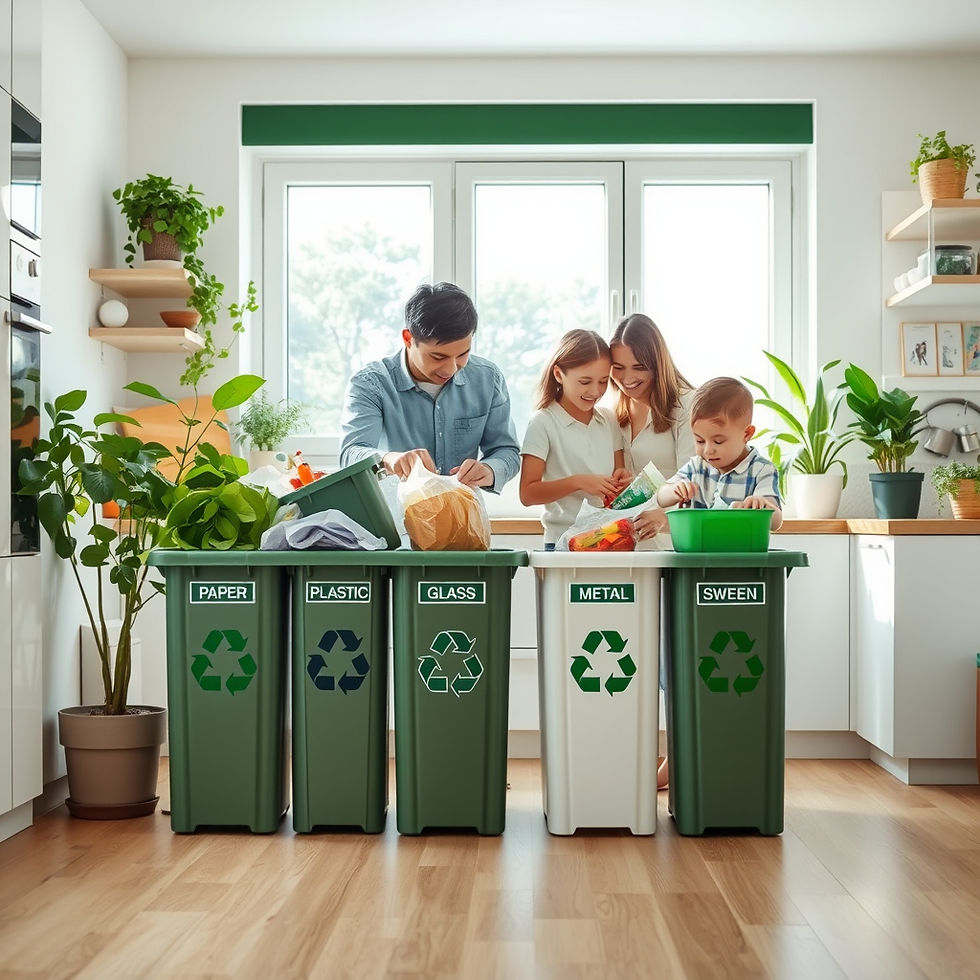
If you've ever stared at a pile of empty bottles, cardboard boxes, and food containers and wondered whether you're actually doing it right — you're not alone. Learning how to recycle at home sounds simple, but millions of households across the world struggle with it every day. This guide breaks down exactly why recycling at home is so difficult, and gives you a clear, doable set of recycling tips for families you can start using right now.
Part One
Why Recycling at Home Is So Difficult
Despite good intentions, most households lose the majority of their recyclable materials — not to bad choices, but to a system full of gaps. Here are the eight biggest reasons household recycling falls short, and why understanding them is the first step to doing better.
1. Lack of Education and Awareness
A majority of households are simply unaware of what, where, and how to recycle properly. Many people mistakenly believe that any container bearing a recycle symbol can be recycled — but that's not true. Not all plastics are recyclable, and recycling rules vary widely from one city or municipality to another. Without clear, accessible information, even well-meaning families make sorting mistakes that contaminate entire batches of recyclables.
2. Contamination of Recyclables
Contamination is one of the most damaging recycling challenges families face. Every day, food waste, plastic bags, diapers, wrappers, and other non-recyclable items end up in recycling bins. Contamination rates in single-stream programs can be as high as 25 percent — and even one contaminated item, like a greasy pizza box or an unwashed jar, can render an entire batch unusable and send everything to the landfill.
3. Inconsistent and Confusing Rules
The lack of standardized recycling programs across different regions is a major source of confusion. What can be recycled in one city may be rejected in another. This inconsistency leads to confusion and what's known as "wish-cycling" — tossing items into the recycling bin and hoping for the best, which actually makes the problem worse.
4. Limited Access to Recycling Services
Access to recycling is not universal. While 85 percent of single-family homes have recycling services, only 37 percent of apartments and condominiums do. This means nearly 20 million households are effectively excluded from recycling — not by choice, but by circumstance. This is one of the most overlooked recycling challenges facing communities today.
5. The Economics of Recycling
Recycling isn't always financially sustainable. The value of recycled materials is frequently lower than the cost of collecting and processing them. When global markets weaken — as happened in 2018 when China stopped accepting foreign recyclables — entire recycling programs collapse. Cities that once profited from recyclables suddenly faced enormous disposal bills.
6. The Plastics Problem
Plastics present a unique and growing challenge. Over 35 million tons of plastic waste are generated annually, yet less than 10 percent is recycled. Six times more plastic is incinerated than recycled. Because virgin plastic is now cheaper than recycled plastic, manufacturers have little incentive to change — leaving households to deal with the consequences.
7. Public Distrust in the System
Many households have lost faith in recycling altogether — and not without reason. Reports of recyclables being dumped into garbage trucks or sent to landfills due to contamination have eroded public confidence. When people don't believe their efforts lead to real results, participation drops. Rebuilding trust requires greater transparency from waste management providers.
8. Everyday Behavioral Barriers
Even when people have access and know the rules, daily habits work against them. Forgetfulness, inconvenience, and the extra time needed to sort waste are common barriers. If bins are placed inconveniently or sorting feels too complex, people default to the easiest option: throwing everything in the trash.
Part Two
10 Practical Recycling Tips for Families — Starting Today
Here's the encouraging truth: only 3 percent of residential recyclables are lost at processing facilities. Almost everything that makes it into the bin gets recycled. The real opportunity is at home — before materials are thrown away. Here are the most effective easy recycling habits every household can build.
A. Organize Your Home for Recycling Success
1. Set up a multi-bin sorting station
Place clearly labeled bins for paper, plastic, glass, and metal in the kitchen — your home's biggest source of recyclable waste. Add smaller containers in bathrooms and home offices too. Strategic placement is one of the simplest yet most effective recycling tips for families: when sorting is convenient, people actually do it.
2. Learn your local recycling rules
Contact your local government or waste management provider to get a specific list of what they accept. Rules differ significantly by area — knowing yours prevents costly contamination mistakes. Print the list and pin it inside a kitchen cupboard. And remember: when in doubt, leave it out.
B. Reduce Before You Recycle
3. Switch to reusable alternatives
The most powerful strategy in any household recycling guide is this: don't generate the waste in the first place. Replace single-use plastic bags, bottles, and cups with durable reusable versions. Bring your own bags when shopping, use a refillable water bottle, and carry a reusable mug for coffee. Small daily swaps add up to a dramatic reduction in household waste over time.
4. Choose products with less packaging
When shopping, look for items sold in bulk or with minimal, biodegradable packaging. As a simple rule: think about the packaging before you buy. Less brought into the home means less to sort, recycle, or throw away. Buying in bulk typically cuts costs too — a practical double benefit for eco-friendly families.
5. Start composting food scraps
Food waste makes up about 25 percent of household trash. Learning how to start composting at home is one of the highest-impact changes a family can make. Even a small countertop bin for fruit peels, vegetable scraps, coffee grounds, and eggshells dramatically reduces what goes to landfill — and produces natural fertilizer for plants or a garden.
C. Recycle Smarter
6. Always rinse containers before binning
Food residue is the leading cause of recycling contamination at home. Before placing plastic bottles, cans, glass jars, and food containers in the recycling bin, give them a quick rinse. They don't need to be spotless — just free of food debris. This five-second habit is one of the most important recycling mistakes to avoid.
7. Flatten boxes and prepare materials properly
Proper preparation helps collection services run efficiently and reduces the risk of materials being rejected:
Flatten all cardboard boxes before placing them in the bin.
Crush aluminum cans to save space.
Bundle loose paper or place it inside a paper bag to keep it from blowing away.
Never put plastic bags in curbside recycling — they jam sorting machinery and cause major disruptions.
8. Handle e-waste and batteries separately
Old phones, laptops, batteries, and electronics contain hazardous materials and must never go into regular or recycling bins. Look for local drop-off centers, manufacturer take-back programs, or community e-waste events. Remove batteries from devices before disposal when possible, and store loose batteries in cardboard or plastic — never metal containers.
D. Make It a Family Habit
9. Assign rotating recycling duties
Building eco-friendly family habits works best when everyone plays a role. Assign sorting and collection tasks to family members on a rotating basis. This shares the workload, creates accountability, and — most importantly — instills sustainable habits in children from a young age. A brief conversation about why recycling matters can do more than any rule ever could.
10. Upcycle, reuse, and donate before discarding
Before anything goes to recycling or the trash, ask: could this be used again? Practicing reduce, reuse, recycle at home in that order has the greatest environmental impact:
Glass jars become storage containers, vases, or candle holders.
Plastic bottles become plant pots with a simple cut and drainage holes.
Old t-shirts and towels become cleaning rags with a pair of scissors.
Gently used clothing, toys, furniture, and books can be donated to community centers or online groups instead of being thrown away.
Frequently Asked Questions About Recycling at Home
What items can be recycled at home?
Most curbside programs accept paper and cardboard, glass bottles and jars, metal cans, and plastic bottles marked with resin codes #1 and #2. However, rules vary by location — always check with your local waste management provider for the exact list of what is accepted in your area.
What are the most common recycling mistakes families make?
The most common recycling mistakes include placing food-soiled items in the bin without rinsing them, putting plastic bags in curbside recycling, wish-cycling (putting items in the bin and hoping they can be recycled), and not knowing the local rules for what is and isn't accepted.
How do I start composting at home?
Start small with a countertop compost bin in your kitchen. Collect fruit peels, vegetable scraps, eggshells, and coffee grounds. Avoid meat and dairy at first. Once full, transfer the contents to an outdoor compost bin or pile, or check if your local government has a composting program that accepts food scraps.
Why does recycling feel so complicated?
Because it genuinely is — the rules are inconsistent between cities, materials are increasingly complex, and the information provided to households is often insufficient. The best starting point is to focus on the basics: rinse your containers, flatten your boxes, and find out exactly what your local program accepts.
Does recycling actually make a difference?
Yes. Research shows that almost all recyclables that make it into the bin are processed correctly — the problem is that 76% of recyclables are lost at the household level, before they ever reach a bin. Every sorted container and rinsed bottle counts toward a real environmental impact.
The Bottom Line: It Starts at Home
Recycling at home is genuinely difficult — and the challenges are real, not imaginary. Confusing rules, inadequate infrastructure, contamination, and distrust all work against household participation. But the research is equally clear: almost all recyclables that make it into the bin do get recycled.
Every rinsed can, flattened cardboard box, composted banana peel, and donated piece of clothing adds up. When families make recycling a shared routine — built into the home's daily rhythm and modeled for the next generation — the cumulative impact is enormous. The solution to the recycling crisis doesn't start in policy chambers or processing plants. It starts at home.


Comments