Household Waste: What Every Room in Your Home Is Hiding — and How to Fix It
- Dean Rusk Delicana
- Apr 28
- 15 min read


The Waste Is Already Inside Your House
We tend to think of waste as something that happens out there — in factories, in shipping containers, on cargo ships crossing oceans. The landfill is somewhere else. The pollution is someone else's problem.
But the numbers tell a different story. Out of the total food wasted globally in 2022, households were responsible for 631 million metric tons — equivalent to 60 percent of all food wasted worldwide. The average American household generates more than 20 pounds of household hazardous waste per year, and as much as 100 pounds can accumulate in the home, often remaining there until the residents move out or do an extensive cleanout.
The problem is not out there. It is in the kitchen. In the bathroom. In the bedroom. In the laundry room. It is in the bins, the cupboards, and the habits of ordinary daily life — hidden in plain sight, generating consequences that most families never connect to the objects they throw away every week.
This article goes room by room through a real household and shows you exactly what is there, what it is doing to the environment, and what you can do about it starting today. But first, there is one critical distinction to make — one that most conversations about household waste get wrong.
Recycling and Waste Reduction Are Not the Same Thing
Ask most people what they do to help the environment at home, and they will say: "We recycle." Recycling has become the default answer to the waste question — the thing households point to when they want to feel they are doing their part.
But recycling and waste reduction are fundamentally different strategies, and confusing them matters.
Recycling is what happens after waste is created. It is the process of collecting used materials — paper, plastic, glass, metal — and processing them into raw materials that can be made into new products. Recycling is valuable. It keeps materials out of landfills, reduces the energy needed to produce new goods, and conserves natural resources. But it is not the first line of defence. It is the last resort before disposal.
Waste reduction — also called source reduction — is what happens before waste exists at all. It means making choices that stop waste from being generated in the first place. Choosing a product with less packaging. Buying only the food you will actually eat. Repairing something instead of replacing it. Using a reusable bag instead of accepting a plastic one. Preventing food from going to waste is one of the easiest and most powerful actions a household can take to save money and reduce its environmental footprint.
The distinction matters because waste reduction is always more powerful than recycling. When you recycle a plastic bottle, you save the energy and resources needed to make a new one. When you choose not to buy the plastic bottle in the first place, you save all of that, plus the energy and resources used to make the bottle you did not buy. The best waste never enters the system at all.
Both strategies are necessary. But waste reduction comes first — and in most households, it receives the least attention.
Now, room by room, here is where the waste actually comes from.
The Kitchen: The Biggest Waste Generator in Your Home
The kitchen produces more waste than any other room in the house, and food waste is its largest single output so far.
One third of all food in the United States goes uneaten. About 96 percent of households' wasted food ends up in landfills, combustion facilities, or down the drain to the sewer system. The cost of food waste to each American consumer is an estimated $728 per year. For a household of four, the annual cost is $2,913 — an average weekly loss of $56.
What goes to waste in a kitchen is almost always invisible until it is counted. Leftovers pushed to the back of the fridge and forgotten. Vegetables bought for a recipe used once and left to soften. Bread bought at the weekend that dries out by Wednesday. Ingredients bought in bulk that expire before they are finished. Expiration dates misread as safety dates, leading to food thrown away that was still perfectly edible.
Beyond food, the kitchen generates significant packaging waste — plastic bags, single-use wrapping, cling film, individual portion packets, and the accumulated cardboard of online grocery deliveries. Kitchen hazardous waste includes ammonia, air fresheners, furniture polish, lighter fluid, metal polish, oven cleaner, batteries, light bulbs, floor cleaner, and bleach-based cleaners. These items are rarely thought of as hazardous because they are sold in supermarkets and used daily — but improper disposal pours corrosive or toxic chemicals into waterways and soil.
The effects of kitchen waste accumulate quickly. Food rotting in landfills produces methane — a greenhouse gas more potent than carbon dioxide. Food waste is responsible for 58 percent of landfill methane emissions released to the atmosphere. Every avoidable meal thrown away contributes to that number.
What works in the kitchen:
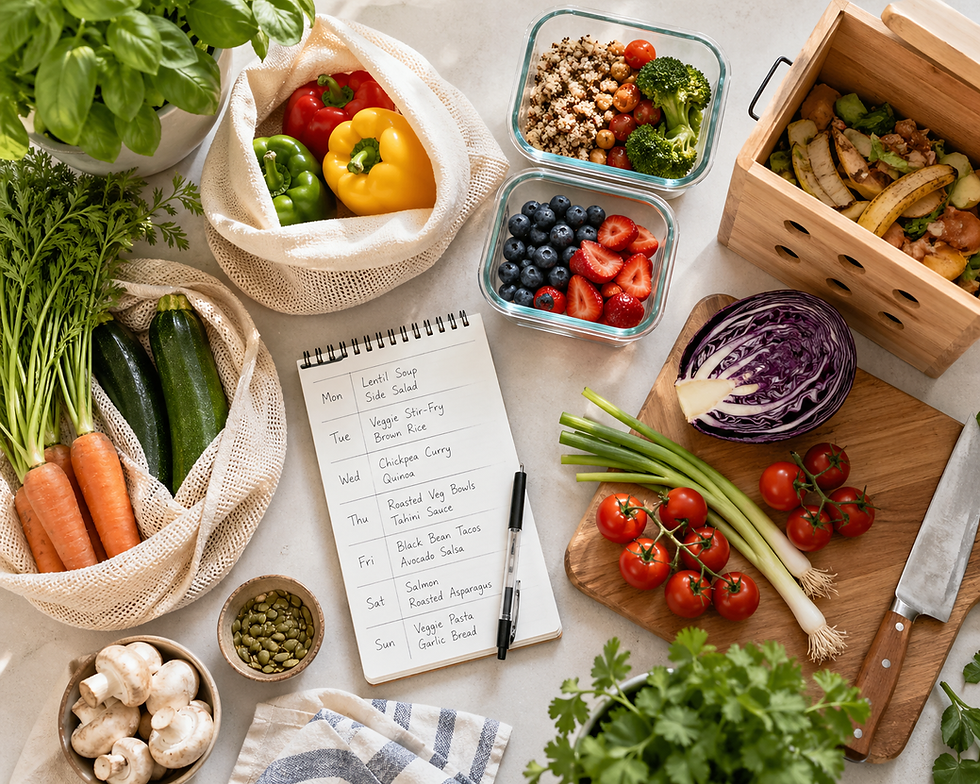
Plan meals before shopping, not after. Buy what the plan requires and nothing more. Store leftovers at eye level in the fridge so they get eaten before they are forgotten. Keep a "use first" section for produce approaching its end. Start a compost bin — even a small one on the counter — for the scraps that are genuinely unavoidable. Switch cleaning products to non-hazardous alternatives wherever possible.
The Bathroom: Small Room, Significant Impact
The bathroom is the room most associated with personal care — and the room whose waste is most likely to end up where it should not.
Bathroom waste includes medications, cosmetic products, aerosol sprays, alcohol-based products such as nail polish remover and hand sanitisers, corrosive chemicals, disinfectants, drain cleaner, tub, toilet, and tile cleaners, window cleaner, bleach-based cleaners, and lead-based products. Many of these are poured down the drain or flushed down the toilet when they are no longer wanted — a disposal method that bypasses treatment systems and deposits chemicals directly into waterways.
Pharmaceutical waste is among the most concerning. Unused or expired medications flushed down the toilet carry active compounds — hormones, antibiotics, painkillers — into water systems that treatment plants are not designed to remove. These compounds have been detected in rivers, lakes, and drinking water sources globally, with measurable effects on aquatic ecosystems.
Plastic waste from the bathroom is equally significant. Single-use plastic bottles — shampoo, conditioner, body wash, face wash — are used for weeks and then discarded. Cotton buds, single-use razors, plastic toothbrushes, and packaging from skincare products accumulate quickly. Most of this plastic is not recyclable due to the residue of the products it contained.
What works in the bathroom:
Return unused medications to a pharmacy rather than flushing them. Switch to refillable containers for shampoo and body wash. Choose bamboo toothbrushes and compostable cotton buds. Look for solid bar versions of shampoo and conditioner — they eliminate the plastic bottle entirely. Use natural cleaning products wherever possible, or make your own from baking soda, vinegar, and citrus. Never pour chemicals down the drain — contact your local authority about hazardous waste disposal days.
The Bedroom: The Textile Problem Nobody Talks About
The bedroom produces less visible waste than the kitchen or bathroom, but the waste it generates is among the most environmentally costly — and the most overlooked.
Clothing is the bedroom's primary waste stream. The rise of fast fashion has made clothing cheaper, more disposable, and more frequently replaced than at any previous point in history. Garments worn a handful of times are discarded. Trends cycle faster than wardrobes can keep up. Returned online orders are often destroyed rather than restocked. And when clothing goes to landfill — as most of it does — it does not decompose cleanly. Synthetic fibers can persist for decades.
Bedroom hazardous waste includes dry cleaning chemicals, mercury thermostats, tobacco smoke residue, mothballs, candles, wall plug-in air fresheners, and lead — particularly in older homes. These items sit quietly in bedrooms for years, leaching compounds into indoor air at levels that, while individually low, accumulate over time.
Electronic waste from bedrooms — old phones, tablets, charging cables, earphones, and broken small appliances — represents a rapidly growing waste stream. These devices contain valuable and toxic materials in the same circuit boards: gold, lithium, cobalt, and lead. When they go to a landfill, the toxic materials leach. When they are recycled responsibly, the valuable materials are recovered.
What works in the bedroom:
Buy less clothing, and buy it to last. When something wears out, repair it before replacing it. Donate usable clothing rather than binning it. When clothing is genuinely unwearable, look for textile recycling programs — most garments can be shredded for insulation or industrial rags rather than landfilled. Take old electronics to dedicated e-waste collection points, never to the general bin. Replace plug-in air fresheners with natural alternatives.
The Living Room: The Accumulation Zone
The living room is where things accumulate without anyone quite noticing. Old magazines that will never be reread. Batteries drained from remote controls and discarded. Candles burned down to their metal bases. Plastic packaging from electronics. Cables for devices that no longer exist.
Municipal solid waste includes durable goods such as furniture, non-durable goods such as newspapers and plastic plates, containers and packaging, and other wastes including yard waste and food. The living room contributes to almost all of these categories without being identified as a significant waste source, because the items it generates are bought infrequently and discarded slowly, making the accumulation less visible than a kitchen bin that fills daily.
Paper and cardboard waste from magazines, newspapers, delivery packaging, and junk mail pile up quickly. Plastic from electronics packaging — the rigid moulded plastic that holds new devices in place — is notoriously difficult to recycle. Batteries, when disposed of in general waste, leak alkaline or lithium compounds into landfills. Furniture, when replaced, often ends up in skips or landfills rather than being repaired, donated, or sold.
What works in the living room:
Unsubscribe from physical magazines and switch to digital. Collect dead batteries in a designated jar and drop them at a battery recycling point. Donate functional furniture before buying replacements. When buying new electronics, research the manufacturer's take-back or recycling program. Reduce delivery packaging by consolidating online orders where possible.
The Laundry Room: Hidden Chemicals in Every Wash
The laundry room is one of the least visible sources of household pollution: microplastic fibers shed by synthetic clothing during washing. Every cycle of a polyester or nylon garment releases thousands of tiny plastic fibers too small for wastewater treatment filters to capture. These fibers travel into rivers, oceans, and eventually into the food chain.
Laundry room hazardous waste includes bleach, detergent, stain remover, fabric softeners, and fluorescent light bulbs. Many commercial laundry products contain chemical compounds that persist in aquatic environments and affect hormone systems in fish and other wildlife. Fabric softeners, in particular, coat fibers with chemicals that can irritate skin and contribute to indoor air pollution.
Clothing itself is a significant input to laundry waste. Overwashing degrades garments faster, shortening their useful life and increasing the frequency of replacement. Washing at unnecessarily high temperatures uses more energy than lower temperature cycles that clean equally well for most loads.
What works in the laundry room:
Wash clothes less frequently — many garments do not need washing after a single wear. Wash at 30°C rather than higher temperatures for most loads. Use a microfibre filter bag or washing machine filter to capture synthetic fibers before they enter the water system. Switch to concentrated, eco-certified laundry detergents in minimal packaging. Never pour detergent or bleach down the drain in excessive quantities. Take fluorescent bulbs to a hazardous waste collection point, never to the general bin.
The Garage and Garden: The Hazardous Stockpile
Garage and garden hazardous waste includes pesticides, herbicides, fungicides, weed killers, fertilizers, automotive batteries, antifreeze, brake fluid, gasoline, diesel, motor oil, transmission fluid, starter fluid, carbon monoxide, and car polish and wax.
The garage is typically the most hazardous room in a home by volume of regulated chemicals. Old paint tins sit half-used for years before being poured down drains or put out with general waste. Motor oil, poured onto ground or into storm drains, contaminates soil and water at extremely low concentrations — a single litre of motor oil can contaminate one million litres of water. Pesticides and herbicides applied in quantities beyond their label instructions run off into waterways, killing non-target organisms and disrupting ecosystems far from the point of application.
Household hazardous waste has the potential to physically injure sanitation workers, contaminate septic tanks or wastewater treatment systems if poured down drains or toilets, and present hazards to children and pets if left around the house.
What works in the garage and garden:
Buy only the quantity of chemicals you need for a specific task. Store all hazardous products in their original labelled containers. Never mix products — incompatible chemicals can ignite, explode, or produce toxic fumes. Participate in local household hazardous waste collection days. Consider replacing chemical pesticides with physical pest control methods or companion planting. Return used motor oil to a garage or collection facility rather than disposing of it as general waste.
The Effects of Household Waste at Scale
Individual households generating individual bags of rubbish seem small. But multiplied across millions of homes, the effects are systemic.
Despite all the recycling technologies in use globally, less than 20 percent of waste is recycled annually, with the remaining 80 percent becoming part of landfill sites. Landfills were the third-largest source of American anthropogenic methane emissions in 2022, accounting for over 17 percent of total methane emissions and about 1.9 percent of total greenhouse gas emissions.
Contaminated household hazardous waste damages treatment infrastructure, threatens sanitation workers, and leaches into groundwater that communities depend on for drinking water. Microplastic fibres from laundry are now found in remote mountain glaciers, deep ocean sediments, and in human blood and lung tissue. Food wasted in homes represents not just the food itself but all the water, land, energy, and labour that went into producing, transporting, and packaging it — all of that resource investment lost the moment an avoidable meal goes into a bin.
The global hazardous waste management market was valued at USD 17.22 billion in 2023 and is projected to grow at a compound annual growth rate of 5.6 percent through 2033. That growth represents not progress — it represents a problem expanding faster than the systems designed to contain it.
The Solution Starts at Home — Literally
The good news is that household waste is one of the most solvable categories of environmental damage, because households are accessible, improvable, and capable of change without waiting for government legislation or industrial transformation.
Households that use drop-off recycling centers generate 26 percent less waste. Pay-as-you-throw programs, when properly implemented, reduce waste by up to 44 percent. Behavior changes at home — meal planning, product substitution, proper disposal of hazardous materials, and textile repair — consistently produce measurable results without requiring new technology or significant cost.
The framework is simple, and it applies to every room:
Refuse what you do not need. Every item that does not enter your home cannot become waste.
Reduce what you do use. Buy less, buy better, and buy with the end of its life in mind.
Reuse before you discard. Give things a second function, a second home, or a second life before the bin.
Recycle what cannot be reused. Sort carefully, clean items before recycling, and know what your local system actually accepts.
Rot what is organic. Compost food scraps and garden waste rather than sending them to landfill where they produce methane.
Dispose responsibly of what cannot be recycled. Especially hazardous materials — never down the drain, never into the general bin.
Start With Knowing What You Actually Throw Away
The most important step in reducing household waste is also the most frequently skipped: finding out where your waste actually comes from before trying to fix it.
Most families assume they know their biggest waste streams. Most are wrong. The kitchen feels like the obvious answer, but for many households the bathroom or laundry room produces more by weight or by chemical impact. The only way to know is to look — honestly, systematically, and for long enough to see the patterns.
That is exactly what our Home Waste Audit Kit is designed to help you do. It is a free four-page printable kit that walks your family through a seven-day waste audit — tracking what you throw away across five categories, identifying your top waste streams, and committing together to a plan for the week that follows. It comes in three formats: a printable PDF, an editable Word document, and a mobile-interactive HTML file that works on any phone browser without an app or internet connection after download.
It is free for a limited time. Download it here.
And if you are a teacher who wants to bring this conversation into a classroom, our Planet Protectors five-day zero waste lesson plan for Grades 2–5 covers every R — Reduce, Reuse, Recycle, Rot, and Rethink — through hands-on activities, visual aids, worksheets, and rubrics. No prep. Open, print, and teach.
The waste is already inside your house. The first step is seeing it clearly.
Frequently Asked Questions About Household Waste
What is the difference between recycling and waste reduction?
Recycling processes used materials into new products after waste has already been created. Waste reduction — also called source reduction — stops waste from being created in the first place. Choosing a reusable bag instead of a plastic one is waste reduction. Sorting that plastic bag into a recycling bin is recycling. Waste reduction is always more powerful because it eliminates the environmental cost of production, transportation, and processing entirely. The most effective household approach uses both — but prioritizes reduction first.
What is household hazardous waste?
Household hazardous waste refers to leftover products commonly found in homes that contain ingredients which can catch fire, react chemically, corrode surfaces, or are toxic to people, animals, and the environment. Common examples include old paint, cleaning products containing bleach or ammonia, pesticides, batteries, motor oil, medications, and aerosol sprays. These items require special disposal — they should never be poured down drains, flushed down toilets, or placed in general rubbish bins, as they can contaminate water systems and injure sanitation workers. Most local councils offer household hazardous waste collection days or permanent drop-off points.
How much food does the average household waste each year?
According to the U.S. Environmental Protection Agency, the average American family of four wastes food that costs approximately $2,913 per year — roughly $56 per week. Globally, households are responsible for 60 percent of all food wasted, amounting to 631 million metric tonnes annually according to the UNEP Food Waste Index Report 2024. Most household food waste comes from forgotten leftovers, misread expiry dates, overbuying, and poor storage rather than spoilage that could not be prevented.
Which room in the house produces the most waste?
The kitchen consistently produces the largest volume of household waste by weight, primarily through food waste and packaging. However, the bathroom and garage often produce the most hazardous waste by category — medications, cosmetics, cleaning chemicals, pesticides, and motor oil all require careful disposal that most households do not practice. The laundry room contributes one of the least visible but most widespread forms of pollution through microplastic fibres released during washing of synthetic fabrics.
What is the most effective thing a household can do to reduce waste right now?
The single most impactful action is a waste audit — spending one week tracking everything your household throws away before making any changes. Most families discover that their biggest waste streams are not what they expected, which means their reduction efforts have been focused on the wrong areas. Once you know where your waste actually comes from, the fixes become obvious and targeted rather than generic. Our free Home Waste Audit Kit walks families through this process in seven days, with a tracker, results summary, action guide, and family pledge card included. Download it free here: payhip.com/b/I7NCx
Can children be involved in reducing household waste?
Absolutely — and involving children is one of the most effective strategies for making waste reduction stick long-term. Children who participate in sorting, tracking, composting, and pledging develop environmental habits that carry into adulthood. Assigning children a specific role — such as ticking the daily tracker, managing the compost bin, or sorting the recycling — gives them ownership and accountability rather than passive awareness. Our Home Waste Audit Kit includes a personal pledge section for children and daily checkboxes designed for kids to manage themselves. For classroom-based learning, Planet Protectors is a complete five-day zero waste unit for Grades 2–5. Explore it here.
What happens to household waste that is not recycled or composted?
Waste that is not diverted through recycling, composting, or reuse goes to one of three destinations: landfill, incineration, or illegal dumping. In landfill, organic waste decomposes without oxygen and produces methane — a greenhouse gas significantly more potent than carbon dioxide in the short term. Food waste alone is responsible for 58 percent of landfill methane emissions in the United States. Incineration reduces volume but produces emissions and ash that require further management. Illegally dumped waste contaminates soil, water, and habitats and creates public health hazards. Less than 20 percent of waste globally is recycled annually — the remaining 80 percent largely ends up in landfill.
How do I dispose of household hazardous waste safely?
Never pour hazardous household products down the drain, on the ground, or into storm drains. Never place them in general rubbish. Keep all products in their original labelled containers. Contact your local council or waste authority to find a household hazardous waste collection programme near you — most areas offer at least one collection day per year, and many have permanent drop-off locations. For medications specifically, return unused or expired medicines to a pharmacy rather than flushing them. For batteries and electronics, use designated collection points available at most large retailers and recycling centres.
How does household waste contribute to climate change?
Household waste contributes to climate change through several pathways. Food waste decomposing in a landfill produces methane. Producing goods that become waste — packaging, clothing, electronics — generates carbon emissions throughout the manufacturing and transportation supply chain. Burning waste in incineration facilities releases carbon dioxide and other greenhouse gases. Household hazardous waste that enters water systems damages ecosystems that absorb and store carbon. Reducing waste at the household level, therefore, addresses climate change not just through less rubbish in bins but through reduced demand for the production systems that generate emissions before a product ever reaches a home.
Related Articles:
References
United Nations Environment Programme (UNEP). Food Waste Index Report 2024. UNEP, 2024. https://www.unep.org/resources/publication/food-waste-index-report-2024
BioCycle. "UN's 2024 Food Waste Index Attributes 60% of Food Waste to Households." BioCycle, April 2024. https://www.biocycle.net/2024-food-waste-index/
HWH Environmental. "Hazardous Waste Statistics to Know in 2026." https://www.hwhenvironmental.com/facts-and-statistics-about-waste/
Center for Sustainable Systems, University of Michigan. "Municipal Solid Waste Factsheet." Pub. No. CSS04-15. 2025. https://css.umich.edu/publications/factsheets/material-resources/municipal-solid-waste-factsheet
U.S. Environmental Protection Agency. "Household Hazardous Waste (HHW)." https://www.epa.gov/hw/household-hazardous-waste-hhw
University of Georgia Cooperative Extension. "Hazardous Household Products: What's in Your House?" CAES Field Report, Circular 1051. October 2025. https://fieldreport.caes.uga.edu/publications/C1051/hazardous-household-products/
U.S. Environmental Protection Agency. "Preventing Wasted Food at Home." https://www.epa.gov/recycle/preventing-wasted-food-home
U.S. Environmental Protection Agency. "National Strategy for Reducing Food Loss and Waste and Recycling Organics." June 2024. https://www.epa.gov/circulareconomy/national-strategy-reducing-food-loss-and-waste-and-recycling-organics
U.S. Environmental Protection Agency. "Food Waste Research." https://www.epa.gov/land-research/food-waste-research
DevelopmentAid. "World Waste: Statistics by Country and Brief Facts." https://www.developmentaid.org/news-stream/post/158158/world-waste-statistics-by-country
Lloyd's Register Foundation. "A World of Waste: Risks and Opportunities in Household Waste Management." World Risk Poll 2024. https://www.lrfoundation.org.uk/publications/a-world-of-waste-risks-and-opportunities-in-household-waste-management
U.S. EPA Pacific Southwest. "Household Hazardous Waste." https://archive.epa.gov/region9/waste/archive/web/html/house.html

Comments